Friday, 10 January 2020

Anthony Berkeley - The Poisoned Chocolates Case


Rating: 4/5

Review:
Hugely enjoyable

This is a hugely enjoyable Golden Age mystery, in which Anthony Berkeley both produces an excellent puzzle and satirizes the very form he is using.

The set-up is that a group of six well-to-do amateur sleuths in 1930s London – authors, a barrister and so on – who have crime as a hobby, all attempt to solve a murder which Has The Police Baffled. The entire book is composed of an exposition of the crime and then the six attempts to identify the murderer, each one resembling the scene at the end of a story in which the Great Detective gathers the suspects together to reveal their own brilliance and (often almost incidentally to that) the identity of the murderer. It’s beautifully done, with witty, elegant prose and some wry skewering of both personalities and that style of crime story. I found touches of Dorothy L. Sayers and Margery Allingham in the prose and characterisation, which is very high praise.

Although it is perhaps just a little laboured in places, I thought this was a real treat. Warmly recommended.

Tuesday, 7 January 2020

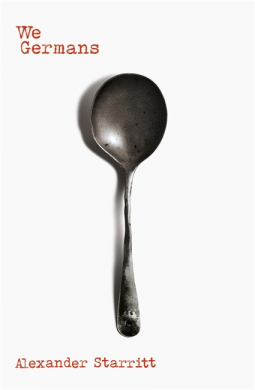
Alexander Starritt - We Germans


Rating: 4/5

Review:
Engrossing and thoughtful

We Germans is a thoughtful and involving book from an unusual and revealing perspective. It is in the form of a letter from a German veteran of the Eastern Front in the Second World War, responding to his British grandson’s questions about the war. He concentrates on a period of just a few days in autumn 1944 when the long, ruinous retreat from Russia has turned into an undignified, exhausted, straggling scramble to evade the pursuing Russian forces. There are reminiscences and digressions which create a context and also some interventions from the grandson, but this is chiefly a stark, human portrait of defeat, the realisation that he has been fighting for something fundamentally wrong and his attempt to resolve and come to terms with his part in what has happened.

I found it readable and gripping, and also quite profound in places. The handful of main characters are convincing and human, as is their interaction with each other. There are some scenes of real horror and Alexander Starritt evokes very well the revulsion but also, after nearly four years of fighting, the jaded acceptance of his narrator. His analysis of the lack of guilt but sense of genuine shame is very shrewd, I think, as is his discussion of whether having fought for Germany under the Nazis automatically makes one an evil person. These are complex and nuanced questions which are too often seen as simple binary moral issues and I think Starritt brings a wider, thoughtful perspective to the questions.

I did find the interventions from the grandson a distraction and rather a clumsy, unnecessary device – although his thoughts on dealing with his mixed heritage are interesting and worthwhile. In spite of this, I found We Germans a very engrossing read which has left me wiser than I was, I think. Slightly flawed, but still very good and recommended.

(My thanks to John Murray for an ARC via NetGalley.)

Saturday, 4 January 2020

Hank Green - An Absolutely Remarkable Thing


Rating: 5/5

Review:
Thoughtful and involving

I thought An Absolutely Remarkable Thing was excellent. This was something of a surprise because I am, shall we say, cautious about novels featuring aliens. However, although non-terrestrial entities are the driver of the book, it is chiefly about internet fame and its effects and also about the way in which major or unexpected events can both unite and divide people as opinions polarize on the internet.

Narrated in the first person by April May, a 23-year-old designer in New York who discovers what seems to be a new work of art on the sidewalk at about 3.00am one morning. She posts a video about it on the internet and as it becomes clear that this is a highly significant global event, she becomes extremely famous (and wealthy) very quickly. What follows is a brilliantly readable account of developments and particularly the effect on April, her attempts to create and control her internet persona in order to do good and bring harmony, and a very shrewd analysis of the darker conspiracy theorists who, with a variety of motives spread fear and division.

It all sounds pretty familiar stuff, but I found April’s voice very refreshing, it’s plausible and excellently paced so I wanted to keep reading and Hank Green’s take on both fame and the tribalism which can take over debate is thoughtful, penetrating and has real resonance with some recent political events. The ending leaves much unresolved and looks as though it’s setting up at least one sequel. Personally, I rather like the inconclusiveness, but I’ll read the next part for sure.

Rather against my expectations, I can recommend this very warmly.

Wednesday, 1 January 2020

Tim Dorsey - Clownfish Blues


Rating: 5/5

Review:
Another Serge treat

Clownfish Blues is another hugely enjoyable episode in the Serge Storms saga. The plot this time (as though it matters) involves lottery scams and faked TV “news” in which, needless to say, Serge and Coleman brilliantly and hilariously dispose of the scumbags and various Bad Guys while, of course, manically pursuing Florida’s diverse history. For example, Serge insists on visiting Sopchoppy:
“This place is so remote and tiny, yet has all kinds of bonus feaures as both the self-proclaimed ‘music capital of North Florida’ and ‘earthworm harvesting capital’ of the whole state. That is a bold range of culture.”

With Tim Dorsey’s enthusiastic research and compelling, madcap storytelling and a welcome return of a couple of characters from Shark Skin Suite, this is another very funny and involving read. Very warmly recommended.

Thursday, 26 December 2019

Robert Bryndza - Nine Elms


Rating: 1/5

Review:
Not for me

I’m afraid I didn’t get on at all well with Nine Elms. I found it rather clumsily written with an inability to distinguish between atmospheric description and tedious, unnecessary detail and with a plot structure which made it blindingly obvious where we were heading. Combine this with yet another Troubled Detective With A Personal Involvement, the implausibility of civilians being given access to police resources and crime scenes, some over-convenient coincidences and a swathe of clichés of the genre and I got very fed up and gave up around half way. It simply didn’t convince, and I didn’t really care what was going to happen because I didn’t believe any of it.

This came highly recommended, but it really wasn’t for me.

Terry Pratchett - Soul Music


Rating: 4/5

Review:
Great fun, but not one of the great man's best

I loved Soul Music when I first read it. On a third reading there is still a lot to enjoy, but I don’t think it’s one of Pratchett’s best.

The story involves Death wandering off trying to forget all he knows, while his “granddaughter” Susan has to step in and carry on the Family Business. Meanwhile, a mysterious universal force is unleashed and Music With Rocks In (i.e. Rock Music) is let loose in Ankh Morpork. There are plenty of terrific jokes and musical references – some wittily sly, some joyfully unsubtle – but as a whole it doesn’t hang together as well as the real Pratchett classics, I think and I found it dragging ever so slightly in places.

This is still great fun, especially if you get references like:
“We lived in the woods, among the evergreens.”
“It must have been a big place?”
“More of a shack…,”
Even a slightly weaker book by Terry Pratchett is better than most, but although it’s a lot of fun Soul Music isn’t out of the great man’s top drawer.

Sunday, 22 December 2019

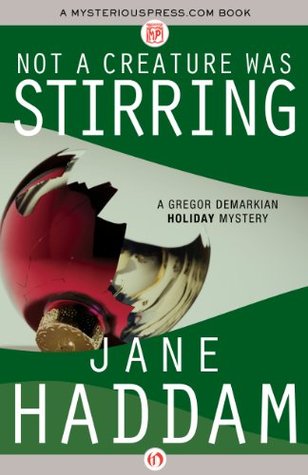
Jane Haddam - Not Creature Was Stirring


Rating: 4/5

Review:
Very enjoyable

I enjoyed Not A Creature Was Stirring. It is the first in a long series featuring Gregor Demakian, and Armenian-American ex-FBI investigator who here gets drawn into the case of a sequence of murders in one of Philadelphia’s richest families.

As a story it’s all pretty cosy and really the equivalent of a familiar Country House mystery set in 1990 Philadelphia. I thought more than once that it was very like a Poirot and then one of the characters said almost exactly that (although the denouement was more Miss Marple than Poirot) – and all that was just fine with me. The real strength of the book lies in Jane Haddam’s very good writing and structure (although it did drag a little in the middle, I thought), her thoughtful characterisation – especially of Demarkian – and her depiction of the Armenian community, all of which I found very good.

I am grateful to Susan Riaz for introducing me to this series. This opener isn’t a classic but is very enjoyable and has real promise for the rest of the series, of which I shall definitely be reading more. Recommended.